

Table of Contents
- Firefighter Keepsake Box vs Wooden Display Case: The Core Difference
- Materials and Construction: Oak, Maple, Walnut, and Beyond
- Storage Capacity and What Fits Inside Each Option
- Wall-Mounted vs Desktop Designs: Placement and Practicality
- Personalization and Customization Options for Both Formats
- Personalized Firefighter Retirement Gifts: Choosing the Right Format
- Firefighter Shadow Box Ideas That Go Beyond the Basics
- How to Preserve Firefighter Gear Inside Any Display Format
- Which Firefighter Keepsake Box or Display Case Should You Choose?
- Conclusion
Last Updated: August 29, 2026
Firefighter Keepsake Box vs Wooden Display Case: The Core Difference
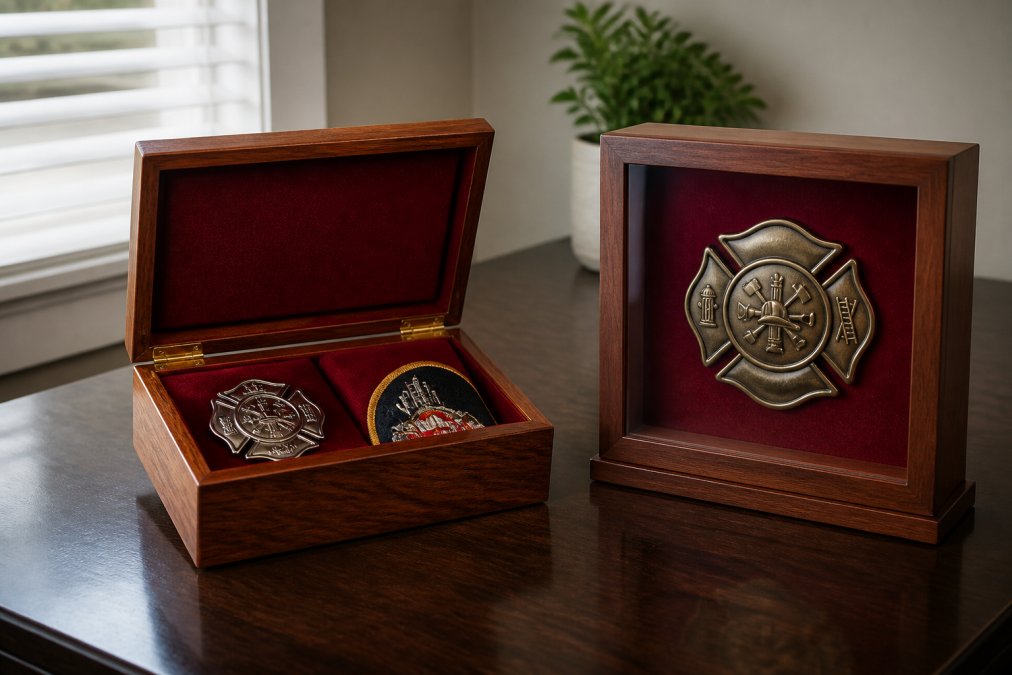
Afirefighter keepsake box is a closed, lidded container built for protected storage of badges, patches, challenge coins, and folded flags, emphasizing safekeeping and portability. A wooden display case is an open-front or glass-fronted frame designed to show items permanently, typically wall-mounted or freestanding with a clear viewing panel.
Get it wrong and you either end up with a beautiful display piece that collects dust in a closet, or a storage box that hides career-defining memorabilia from everyone who should see it.
At ElBomberoUSA, we work closely with the firefighter community and understand how meaningful these commemorative pieces are, whether they honor an active career, mark a retirement, or serve as a memorial tribute. This guide breaks down every major difference between the two formats so you can choose the right one for your specific situation.
What a Keepsake Box Is Built to Do
A firefighter keepsake box prioritizes protection and organization. The hinged lid closes securely, often with a latch mechanism, to shield contents from dust, humidity, and handling damage. Interior compartments, velvet lining, and felt-covered dividers keep items from shifting or scratching. The format suits anyone who wants to store a curated collection privately, transport it safely, or present it as a gift without requiring immediate commitment to permanent display.
Because they close, keepsake boxes become personal statements through exterior details: laser-engraved department insignia, a nameplate with years of service, custom artwork on the lid. The inside is intimate, a private record of a career.
What a Wooden Display Case Is Built to Do
A wooden display case is built for visibility. Its primary function is presenting memorabilia in a way that invites viewing, whether mounted on a station wall, hung in a home office, or positioned on a mantel. Glass or acrylic fronts protect contents while keeping them permanently visible. Shadow box configurations allow items to be mounted at specific depths, creating a layered, three-dimensional presentation that a flat box interior cannot replicate.
The trade-off is flexibility. Once items are mounted inside a display case, repositioning them takes effort. A display case is a commitment to a specific arrangement, ideal for a completed career rather than an ongoing collection.
A firefighter keepsake box is the right choice when storage, portability, and gift presentation matter most. A wooden display case wins when permanent, visible display of a finished collection is the goal.
Materials and Construction: Oak, Maple, Walnut, and Beyond
Wood species selection defines the character, durability, and long-term appearance of any firefighter memorabilia piece. The most common hardwoods used are oak, maple, and walnut, each with distinct grain patterns, hardness ratings, and finishing properties.
Oak is dense, open-grained, and takes stain evenly, producing a traditional, authoritative look that suits fire department aesthetics. Its hardness resists denting from repeated opening and closing.
Maple is tighter-grained and naturally lighter, making it ideal for clean, modern finishes. It machines precisely, benefiting intricate engraving work on lids and nameplates.
Walnut is the premium choice. Its naturally dark, rich tone requires minimal staining, and its grain pattern gives each piece unique character. Walnut is most associated with heirloom-quality furniture, and a walnut firefighter keepsake box or display case carries that same visual weight. According to the Wood Database's hardwood species guide, walnut ranks slightly softer than oak on the Janka hardness scale but is prized for its workability and natural luster.
Some manufacturers use furniture-grade hardwoods sourced for consistent grain and minimal defects. Others use MDF cores with hardwood veneers, a cost-reduction technique that looks fine initially but performs poorly over time, especially in humid environments where the veneer can separate.
Comparative Durability: Which Wood Holds Up Longer
Solid hardwood construction outlasts veneer-over-MDF in almost every real-world condition. The relevant variables are joint construction, finish quality, and hardware. Dovetail or box joints at corners hold better than simple butt joints reinforced with staples. A lacquer or oil finish protects the wood grain from moisture infiltration; a thin coat of paint cannot protect poor-quality substrate.
For display cases, the door or panel frame matters as much as the box itself. Frames that are too thin flex under the weight of glass, stressing hinges and causing misalignment. Quality construction uses frames at least 3/4 inch thick with mortise-and-tenon or dowel joinery at corners.
| Feature | Solid Hardwood | Veneer over MDF |
|---|---|---|
| Humidity resistance | High | Low (veneer separation risk) |
| Engraving quality | Excellent (deep, clean cuts) | Good on surface only |
| Joint durability | Excellent with proper joinery | Moderate |
| Long-term appearance | Improves with age | Can degrade over 5-10 years |
| Best for | Heirloom-quality pieces | Budget display options |
A solid walnut or oak keepsake box costs more upfront, but it is the only format that genuinely qualifies as an heirloom, something a firefighter's family will still want to keep in another generation.
Storage Capacity and What Fits Inside Each Option
Storage capacity is where the two formats diverge most sharply. A keepsake box is depth-optimized for stacking and organizing. A display case is depth-limited by design; items need to sit close to the viewing surface.
Badges, Medals, Patches, and Challenge Coins
A typical firefighter keepsake box measures roughly 12 to 14 inches wide, 9 to 10 inches deep, and 4 to 6 inches tall, enough to organize dozens of coins, multiple patches, and several medals without stacking them directly on top of each other.
Display cases work differently. Shadow box configurations position items against a velvet or felt background at a fixed depth, typically 1.5 to 3 inches. This is sufficient for badges, medals, commendation bars, and flat patches. Challenge coins display beautifully in dedicated coin holders or rows mounted to the felt background.
Larger Items: Axes, Helmet Shields, and Flag Storage
A standard fireman axe cannot fit inside most keepsake boxes; the handle alone typically runs 26 to 36 inches. Wall-mounted display cases designed specifically for axes exist for this reason.
Memorial flag boxes are purpose-built to standard dimensions. A regulation burial flag, folded into a triangle, measures approximately 12 by 12 by 3 inches. Flag display cases hold the folded flag securely without compression.
Helmet shields present a middle-ground challenge. Some premium keepsake boxes include a routed recess in the lid interior specifically for a helmet shield, a detail worth confirming before purchase.
Wall-Mounted vs Desktop Designs: Placement and Practicality
Placement shapes every other choice. Wall-mounted display cases suit fire station common areas, home offices, and formal living spaces where the memorabilia is meant to be seen by others. Desktop designs, including most keepsake boxes and some smaller shadow boxes, suit personal spaces, bedside tables, desks, and shelves where the owner interacts with the piece privately.
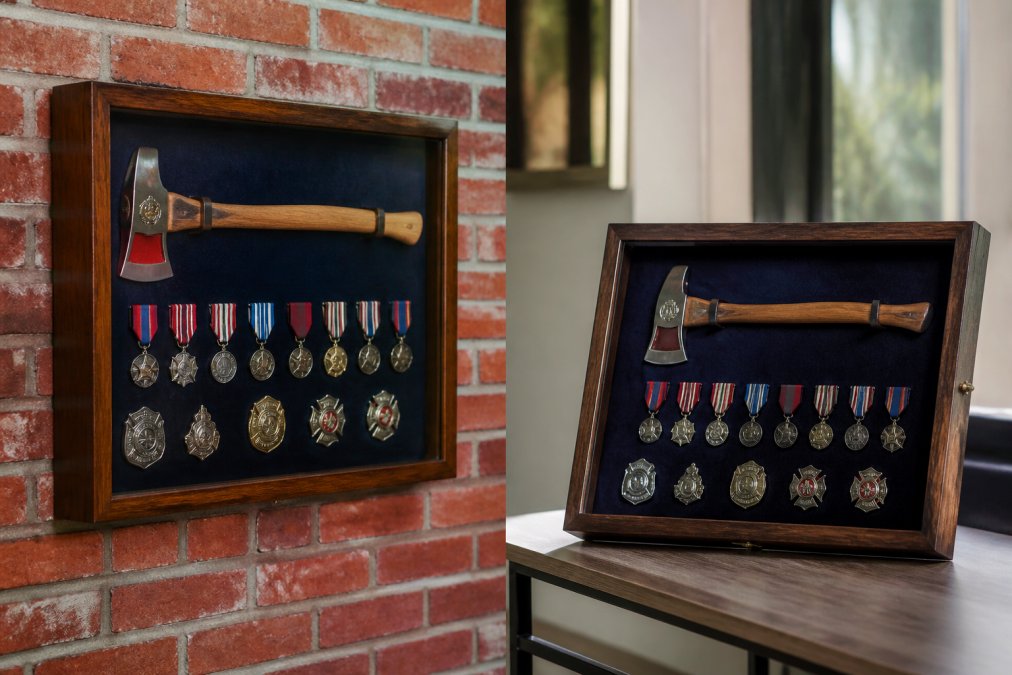
Wall mounting introduces structural requirements. A display case holding a full-sized axe, multiple medals, and a glass front can weigh 15 to 25 pounds fully loaded. The mounting hardware needs to anchor into wall studs or use appropriate toggle bolts for drywall. Cases should include a French cleat or dual keyhole bracket system to distribute weight evenly. According to the International Building Code standards for residential wall anchoring, wall-mounted objects over 10 pounds should anchor into structural members whenever possible.
Desktop keepsake boxes require no installation, move easily when a firefighter relocates, and can be opened and handled without tools. For active-duty firefighters who haven't settled on a permanent home for their collection, a keepsake box is the more sensible starting point.
A hybrid approach, a desktop shadow box with a folding easel back that also includes keyhole slots for optional wall mounting, gives buyers both options and is increasingly common in quality firefighter memorabilia products.
Personalization and Customization Options for Both Formats
Personalization transforms a storage product into a genuine commemorative piece. Both keepsake boxes and display cases support extensive customization, but the techniques and visible surfaces differ.
Custom Engraving, Nameplates, and Department Artwork
Laser engraving on solid hardwood produces the cleanest, most durable results. A well-executed engraving on an oak or walnut lid can include a firefighter's name, badge number, department name, years of service, and department insignia at a level of detail that rivals professional printing. The engraving cuts into the wood grain itself, so it cannot peel, fade, or scratch off.
Brass nameplates offer a different aesthetic, more formal and traditional, and suit display cases where the nameplate mounts to the exterior frame. Some manufacturers combine both: a laser-engraved lid with a recessed brass nameplate on the front face.
Department artwork requires vector-format files for clean engraving results. Most custom workshops request a department's logo in SVG or AI format. Custom Fire Department Keepsake Boxes typically offer laser-engraved text and brass nameplate options with interior upgrades including felt-lined bottoms and shadow-box layouts.
Velvet Lining, Felt Backgrounds, and Interior Finishes
Interior finish choices affect both aesthetics and preservation. Velvet lining is the premium standard for keepsake box interiors; it cushions items, prevents scratching, and presents well when the box is opened as a gift. Common color options are black, navy, burgundy, and red.
Felt backgrounds in display cases serve a similar function but face different demands. The felt needs to hold mounting pins, accept adhesive strips, and stay taut against the backing board over years of temperature cycling. Quality felt backgrounds use a hardboard backing with a false interior back that allows items to be pinned securely without the pins penetrating the case frame itself.
Personalized Firefighter Retirement Gifts: Choosing the Right Format
A retirement marks the end of an active career and the moment when a firefighter's collection becomes a complete record rather than a work in progress. That shift should guide the format choice.
For retirement, a wooden display case is usually the stronger choice. It presents the full career visibly, honors the service publicly, and serves as a conversation piece in a home or office. A shadow box configured for retirement typically includes the badge, rank insignia, department patch, service medals, a career photo, and a nameplate with dates of service.
A firefighter keepsake box makes a compelling retirement gift when the recipient values privacy, has a collection that includes fragile or valuable items, or when the gift-giver cannot confirm where the piece will be displayed. A keepsake box also works better as a surprise gift because it does not require advance knowledge of the recipient's wall space or interior design.
The most thoughtful retirement gifts combine both formats: a keepsake box for personal, private items and a display case for career achievements meant to be seen. This approach acknowledges that a firefighter's career produces two categories of memorabilia, the public record and the personal one.
NFPA's resource on firefighter recognition and career milestones
Firefighter Shadow Box Ideas That Go Beyond the Basics
Most firefighter shadow box ideas follow the same template: badge in the center, patches arranged around it, nameplate at the bottom. That arrangement works, but it is not the only option.
A career-arc layout organizes items chronologically rather than hierarchically. Starting with recruit academy patches on the left, progressing through rank advancements and specialized unit patches toward the right, the shadow box becomes a visual timeline of a career. This approach works particularly well in landscape orientation with a wider-than-standard frame.
A unit-specific shadow box focuses on a single assignment, a hazmat team, a technical rescue unit, or a wildland firefighting deployment, rather than the full career. These specialized displays often include mission-specific gear, unit challenge coins, and photographs from the field.
Memorial shadow boxes honoring a fallen firefighter require more care in layout and material choice. The American flag occupies the central position, flanked by the badge and any commendations. The nameplate should include the line-of-duty date. According to the National Fallen Firefighters Foundation's memorial guidelines, proper memorial displays follow specific protocols that honor both the individual and the institution.
The rustic flag display format, exemplified by handcrafted solid wood pieces with a lightly burned finish, offers a third aesthetic direction suited to firefighters who prefer a more rugged, authentic look.
How to Preserve Firefighter Gear Inside Any Display Format
Preservation is the topic most product descriptions skip entirely. A display case or keepsake box protects memorabilia from physical damage, but without attention to light, humidity, and material interactions, the items inside can degrade regardless of enclosure quality.
UV Protection, Acrylic vs Glass, and Humidity Control
Ultraviolet light is the primary enemy of fabric patches, medal ribbons, and photograph prints. Standard glass transmits roughly 65-75% of UV radiation. Acrylic with UV-inhibiting additives blocks 98% of UV at a fraction of the weight of glass. For any display case that will hang in a room with natural light, UV-protective acrylic is the correct specification.
Humidity control matters most in geographic areas with seasonal humidity swings. Wood expands and contracts with humidity changes, stressing joints and warping thin panels. Metal badges and coins are vulnerable to oxidation in high-humidity environments. The practical solution is a small silica gel desiccant packet placed inside closed keepsake boxes, replaced every six to twelve months. Display cases benefit from placement away from exterior walls and heating vents.
Preservation Techniques for Vintage Memorabilia
Vintage firefighter memorabilia, pre-1970s badges, early department patches, and antique axes require handling protocols that newer items do not. Bare hands transfer oils and acids to metal surfaces; cotton or nitrile gloves are the correct tool for handling vintage badges before mounting. According to the Smithsonian Institution's guidelines for metal artifact preservation, even fingerprints left on polished metal can cause permanent etching over decades.
Vintage fabric patches present a different challenge. Old embroidery threads can be brittle, and the backing fabric may be fragile. Mounting vintage patches with pins risks tearing. The correct technique is to sew the patch to a felt backing using a curved upholstery needle and matching thread, then mount the felt backing to the display surface.
For antique wooden handles on vintage axes, a light application of linseed oil annually prevents drying and cracking. Apply with a lint-free cloth, allow 24 hours to absorb, then wipe off the excess. Do not apply oil to metal heads, it attracts dust and can interfere with the patina that gives antique axes their character.
A checklist for mounting vintage memorabilia correctly:
- Handle all metal items with clean cotton or nitrile gloves
- Clean metal surfaces with a dry microfiber cloth before mounting, no chemical cleaners on vintage badges
- Sew vintage fabric patches to felt backing rather than pinning directly
- Use acid-free mounting tape or archival-quality adhesive strips for paper items
- Place silica gel desiccant in any closed enclosure housing vintage items
- Position display away from direct sunlight, even with UV-protective acrylic
- Document each item with a photograph and written provenance before mounting
Which Firefighter Keepsake Box or Display Case Should You Choose?
The right choice comes down to three questions: Who is this for? Where will it live? What does the collection include?
| Decision Factor | Choose a Keepsake Box | Choose a Display Case |
|---|---|---|
| Primary purpose | Storage, portability, gift-giving | Permanent display, public viewing |
| Collection status | Ongoing, growing collection | Completed career or milestone |
| Location | Desk, shelf, personal space | Wall, station common area, formal room |
| Key items | Coins, patches, medals, small badges | Axe, flag, helmet shield, large medals |
| Occasion | Active duty, personal use, surprise gift | Retirement, memorial, formal recognition |
| Customization priority | Lid engraving, exterior nameplate | Interior layout, velvet background, frame finish |
| Preservation priority | Closed protection, humidity control | UV-protective acrylic, dust-free display |
The firefighter keepsake box wins for active-duty firefighters, gift-givers who need a complete, ready-to-present package, and anyone who values privacy. It is also better when the collection is still growing, as a closed box accommodates additions without requiring remounting.
The wooden display case wins for retirement recognition, memorial tributes, and firefighters who want their career achievements visible to family, colleagues, and guests. When properly specified with UV-protective acrylic and quality hardwood construction, it provides excellent long-term preservation.
The most common mistake is choosing based on appearance alone. A beautiful walnut display case is meaningless if the recipient cannot drill into the walls. A premium keepsake box is the wrong retirement gift if the firefighter wants to display their badge prominently.
For firefighters and first responders who want their memorabilia housed in something that genuinely reflects the character of the fire service, the standard to hold any piece against is whether it would still be worth keeping in 30 years. That standard rules out veneer-over-MDF construction, thin acrylic without UV protection, and hardware that corrodes. It keeps solid hardwood, quality latch mechanisms, museum-grade interior finishes, and craftsmanship that honors the service.
The challenge with firefighter memorabilia storage is that the stakes are higher than most display decisions. These are career artifacts, sometimes irreplaceable, often carrying personal and emotional weight that goes well beyond their physical form. ElBomberoUSA was built around that understanding, the belief that firefighter-themed collector's pieces should meet a standard of craftsmanship and tribute that matches the service they honor. Whether you choose a keepsake box for protected storage or a display case for permanent presentation, prioritize solid wood construction, UV-protective viewing panels, and customization that reflects the individual firefighter's career rather than a generic fire department aesthetic. Get started with ElBomberoUSA and find firefighter-themed collector's pieces built to the standard the fire service deserves.
Frequently Asked Questions
Q: What is the primary difference between a firefighter keepsake box and a display case?
A: A firefighter keepsake box is built for enclosed, protected storage with a hinged lid, making it ideal for items you want to keep safe rather than constantly visible. A wooden display case prioritizes visibility, typically featuring protective glass or acrylic on the front so memorabilia like badges, medals, and patches can be seen without opening anything. The right choice depends on whether your priority is preservation, display, or both.
Q: What items are best suited for a firefighter keepsake box?
A: A firefighter keepsake box works best for smaller, personal items: challenge coins, commendation bars, collar pins, folded flags, and department patches. The enclosed design with velvet or felt lining protects these items from dust, light exposure, and handling damage. Some boxes include drawer storage for layering multiple categories of memorabilia, making them practical for firefighters who have accumulated gear across a long career.
Q: What makes a firefighter-themed keepsake box a meaningful retirement gift?
A: A personalized firefighter keepsake box honors a career in a tangible, lasting way. Custom engraving with a name, badge number, rank, and years of service transforms a functional box into a commemorative piece. For retirement specifically, the enclosed format also signals permanence, the career is complete, and these items deserve protection as heirlooms. Heirloom-quality solid wood construction in oak or walnut adds to the sense of permanence that makes it a meaningful gift.
Q: Are wooden display cases better for long-term preservation of fire service gear?
A: Wooden display cases with UV-protective acrylic or glass doors offer strong long-term protection for displayed memorabilia. Look for cases rated at 98% UV protection to prevent fading on patches, ribbons, and fabric items. For vintage or fragile firefighter gear, pairing a display case with archival-quality backing materials and controlling room humidity adds another layer of preservation that a standard case alone does not provide.
Q: How do you mount a wall display case for firefighter memorabilia safely?
A: Most wall-mounted display cases for firefighter memorabilia ship with mounting hardware included. Locate wall studs using a stud finder before drilling, since a fully loaded case with an axe, medals, and hardware can weigh significantly more than an empty one. Use lag screws into studs rather than drywall anchors alone for anything weighing over 10 pounds. Level the case with a spirit level before finalizing screws to ensure the display hangs straight and secure.